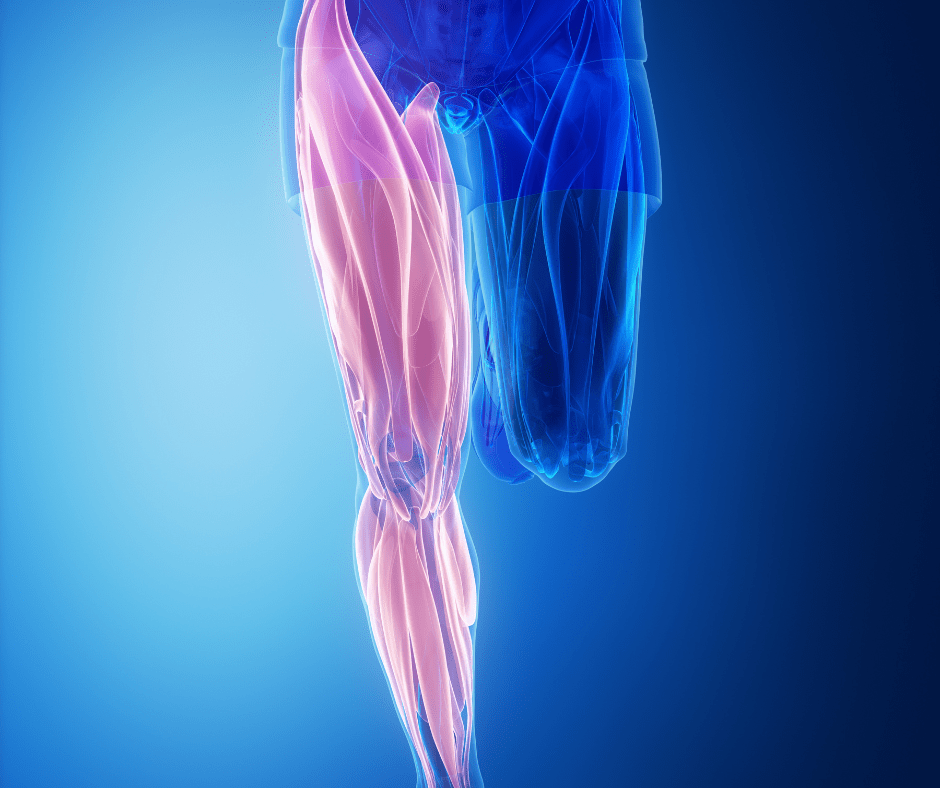
The knee is an amazing piece of biology. It’s an intersection of muscles, bones, and ligaments. The muscles that connect the knee to the hip run along the femur. These are the biggest muscles in the human body. Each of them is responsible for moving and stabilizing the knee through different ranges.
Welcome to Topic Tuesday, where we discuss a specific topic relating to health, business, or life in general. Today, I want to talk to you about how knee pain can have many different treatable causes.
Muscles Causing Your Knee Pain
Knee function is partially a product of how healthy and strong these muscles are. As with any other joint, stiff, overworked, or otherwise underdeveloped muscles around the knee can cause pain. When it’s working properly, you barely notice anything about it. There’s no issue with standing, climbing stairs, or moving around.
If the muscles surrounding your knee become stiff, damaged, strained, or inflamed through overuse, this could be causing your knee pain. This might make it more difficult to do some of the things you’ve worked into your routine. Pain can actually change your life by making you turn away from things you wouldn’t have if you were healthy.
Here are the muscles that connect to the knee:
Quadriceps
The quadricep is the heavy junction of muscle on the front part of the thigh. This muscle pulls the knee straight. It’s important for pushing the weight of the body against the pull of gravity. You use your quadriceps whenever you squat, stand, climb down stairs, and kick your legs.
The quadricep connects to the knee through the tendon. If the muscle becomes tight or inflamed, the tendon’s connection to the knee could become less stable.
Gastrocnemius
The muscles in the calf connect to the knee at the lower leg. This muscle is mostly responsible for extension of the foot at the ankle. Calf muscles are smaller than the quadriceps or the hamstrings, but they still have to carry the weight of the entire body. It’s not uncommon for calf muscles to become stiff and tight enough to cause knee discomfort over time.
Biceps Femoris
The hamstrings connect to the hip underneath the gluteus. At the other end, they connect to the back of the knee. From this position at the back of the femur, the hamstring controls curling the leg, bringing the heel closer to the torso. You use the hamstrings often in conjunction with the opposing quadriceps muscles for stability when squatting, pulling loads from beneath you, and walking upstairs.
Gracilis
The gracilis is much smaller than the other muscles that connect to the knee. It’s primarily a stabilizer for lateral movement or the thighs. There are few athletic movements that isolate the gracilis, and it’s almost always used along with the other muscles of the upper leg. Flexibility in the gracilis is very important to preventing injuries.
What To Do About Knee Pain
Are you experiencing knee pain due to muscle tightness, soreness, or injury? Don’t jump straight to surgery yet. Physical therapy might be the first step in your recovery.
Contact my team to learn more about how physical therapy can help with your knee pain today!
 Dr. Slava Shut
Leave a comment